
Your brand’s unique value proposition is the single most important statement you’ll ever write for your business. I learned this the hard way after spending months crafting marketing messages that fell completely flat. Nobody cared.
Nobody converted.
And honestly? I couldn’t blame them because I hadn’t given them a clear reason to choose us.
Here’s what changed everything: I stopped trying to sound impressive and started being crystal clear about the value we delivered.
That shift turned everything around.
What Makes a Strong Unique Value Proposition?
A compelling value proposition isn’t some fancy marketing jargon.
It’s the honest answer to one simple question: why should someone choose you instead of scrolling past to your competitor?
Think of it as your brand promise in its most powerful form. It needs to connect with your target audience on both practical and emotional levels.
When someone lands on your website, they should instantly understand what your brand is and why it matters to their life.
The best value propositions I’ve seen share three traits: they immediately clarify the main benefit, speak directly to customer needs, and showcase clear brand differentiation.
No fluff.
No corporate speak.
Just straight talk about the customer value you deliver.
How Do You Identify Your Target Audience?
This is where most people mess up, and trust me, I did too. You can’t craft a killer value proposition if you’re trying to talk to everyone. That’s like shouting into a crowded room and hoping someone hears you.
Get specific about who you’re serving. Go beyond basic demographics and dig into psychographics.
What keeps your ideal customers awake at night?
What goals are they chasing?
I spent weeks interviewing my best customers, and those conversations completely changed how I understood their needs.
Use customer segmentation to tailor your messaging.
Create detailed buyer personas.
Analyze the patterns in consumer behavior.
Look at your existing customer base and figure out who actually gets the most value from what you offer.
These insights become your foundation for positioning that connects.
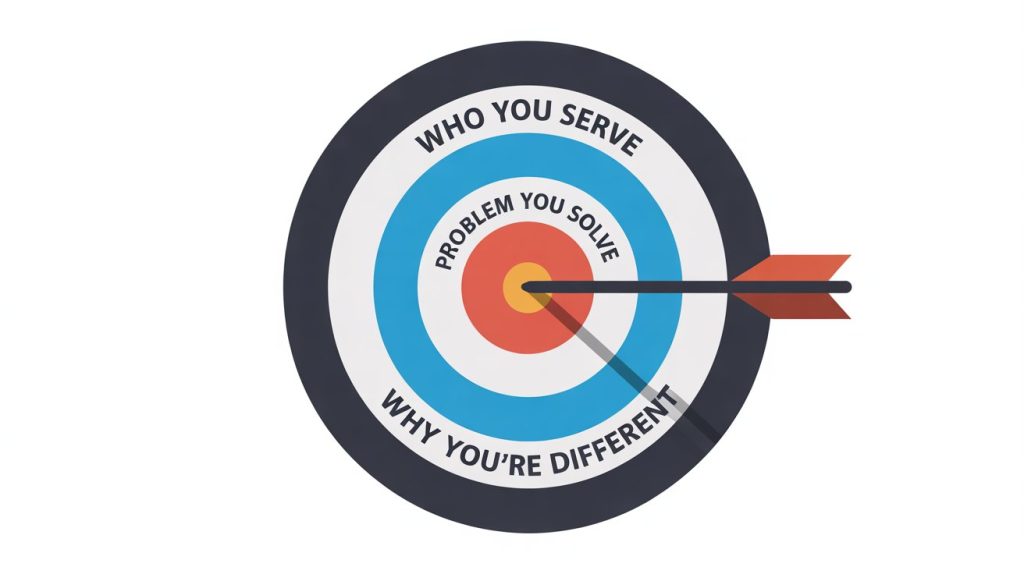
What Problem Does Your Brand Actually Solve?
Every strong value proposition starts with a real problem that people are desperate to solve.
And here’s my biggest lesson: people don’t buy features. They buy outcomes.
Focus on the specific customer pains your product or service eliminates.
When I finally stopped listing what my service included and started explaining how it transformed people’s businesses, everything clicked.
Frame your brand as the solution that either removes their frustration or helps them achieve their goals.
Consider both functional and emotional dimensions.
Maybe you save customers time, reduce their stress, or help them feel more confident.
Perhaps your solution offers cost leadership in your category or provides gain creators that competitors can’t match.
The clearer you are about the problem, the more compelling your solution becomes.
Why Should Customers Choose You Over Competitors?
This is where your competitive advantage takes center stage, and it’s where I see businesses get too modest or too generic.
What genuinely makes your offering different?
Maybe it’s your unique approach to customer experience.
Maybe it’s your specialized expertise in a niche market.
Perhaps it’s your brand values, your customer service quality, or the way you’ve built real emotional connection with your audience.
I recommend using a value proposition canvas to map this out systematically. Plot your product features against customer jobs to be done. Identify which pain relievers and gain creators set you apart.
Look for barriers to entry you’ve created through your brand equity or strategic positioning.
Product differentiation only works when it’s meaningful to customers. A unique selling proposition is about being better in ways that actually matter to your target market.
How Do You Write Your Value Proposition Statement?
Alright, here’s where the rubber meets the road. I’ve written dozens of these, and the ones that work follow a simple formula.
Start with a clear headline that states your main benefit in one compelling sentence. No clever wordplay.
No trying to be cute. Just be direct about what you deliver.
Follow with a subheadline that adds context.
Who is this for?
What makes it unique?
How does it work?
This supporting statement should expand on your headline without getting wordy.
Consider adding three to five bullet points covering your key differentiators. These reinforce your strategic advantage and give readers concrete reasons to choose you.
Keep each point focused on customer benefits, not features.
Test your statement against these criteria:
Does it clearly communicate customer value?
Is it instantly understandable?
Does it differentiate you from competitors?
Would your target audience find it relevant and compelling?
If you can’t answer yes to all four, keep refining.

Does Your Value Proposition Align With Your Brand Strategy?
Your unique value proposition needs to reflect your broader brand positioning and core competencies. It should reinforce your brand identity and support your overall brand messaging.
Understanding the difference between brand identity and brand image helps you craft a value proposition that authentically represents who you are while shaping how customers perceive you.
I learned this lesson when my value proposition promised one thing, but my brand experience delivered something else.
The disconnect killed conversions. Now I make sure everything aligns.
If your brand story emphasizes innovation, your value proposition should highlight your innovation strategy. If you’re known for exceptional service quality, that needs to shine through.
Your value proposition should work across your entire customer journey, from awareness to repeat purchase behavior.
It informs your brand communication, shapes your brand experience, and guides how you build customer relationship management systems.
What Role Does Customer Experience Play?
Here’s something I wish someone had told me earlier: strong brand differentiation increasingly comes from how you deliver value, not just what you deliver.
Your user experience, personalization efforts, and overall customer service become part of your value proposition. These elements build brand trust and create the emotional connection that drives brand advocacy.
Think about the complete customer journey.
How do you exceed customer expectations at each touchpoint?
What makes your brand personality memorable?
How does your approach to customer engagement set you apart?
These experiential elements strengthen your position and improve customer satisfaction in ways that purely functional benefits can’t.
How Can You Test and Refine Your Value Proposition?
Don’t assume your first draft is perfect. I sure didn’t get mine right the first time. Test your value proposition with real customers.
Gather customer insights through surveys, interviews, and analyzing net promoter scores. Watch how people respond to different versions.
Do they immediately grasp your message?
Does it resonate with their needs?
Use A/B testing on your website and marketing materials. Monitor metrics like time on page, conversion rates, and customer retention. Track brand awareness and brand perception over time. These measurements tell you whether your value proposition is actually working.
Refine based on what you learn. As market demand shifts or consumer perception evolves, your value proposition may need updates.
Stay connected to customer gains and pains. Keep your positioning relevant as your market changes.
Crafting Your Brand’s Unique Value Proposition
A well-defined brand’s unique value proposition does more than attract new customers. It becomes the North Star for your entire organization.
It guides product development, informs market positioning decisions, and shapes how you build brand equity over time.
When your value proposition authentically reflects what makes you special and speaks directly to customer needs, it creates lasting competitive advantage.
It turns satisfied customers into brand advocates. It builds the kind of brand loyalty that protects you from price competition and market shifts.
Your value proposition isn’t just marketing copy. It’s the strategic positioning that defines your place in the market and in customers’ minds.
Get it right, and you’ve laid the foundation for sustainable growth and genuine brand differentiation that competitors can’t easily replicate.

Frequently Asked Questions
What is a brand’s unique value proposition?
A brand’s unique value proposition is a clear statement explaining what makes your offering different, what benefits customers receive, and why they should choose you over competitors.
How is a unique value proposition different from a unique selling proposition?
While often used interchangeably, a unique selling proposition typically focuses on one standout feature, while a unique value proposition encompasses the complete customer value and experience you deliver.
How long should a value proposition be?
Your main value proposition statement should be one clear headline with a supporting subheadline or brief paragraph. The entire message should be digestible in under 10 seconds.
Can a company have multiple value propositions?
Yes, especially when serving different customer segments. However, your core brand promise should remain consistent while tailoring messaging to specific audience needs.
How often should you update your value proposition?
Review your value proposition annually or whenever significant market changes occur, but avoid frequent changes that confuse your audience or dilute brand recognition.
What makes a value proposition compelling?
A compelling value proposition clearly addresses customer pains, highlights specific benefits, demonstrates genuine differentiation, and creates an emotional connection with your target audience.