
Most local businesses struggle because they think being good at what they do is enough. It’s not. These seven core elements for a successful local branding strategy needs go way beyond having decent products or friendly service.
There’s a massive gap between businesses that survive and ones that become community institutions people genuinely care about.
The difference?
These seven fundamentals.
And they’re not complicated, but most local businesses completely miss them.

What Actually Makes a Local Brand Stand Out?
Your competition isn’t just other businesses in your category. You’re competing against every single business experience your customers have ever had.
That amazing customer service at the bookstore? Now they expect it from you.
The seamless online ordering from that restaurant? They want that too.
The community involvement from the gym that sponsors little league? That matters now.
Your local brand is the complete picture of who you are, what you stand for, and why people should choose you over literally everyone else. Miss even one of these core elements, and you’re making it way harder than it needs to be.

Core Element 1: Your Unique Selling Proposition
This is where most local businesses absolutely bomb. They say things like “we offer quality products and great service.” So does everyone else.
Your unique selling proposition needs to answer one question: why should someone choose you instead of the competition? And “because we’re nice” doesn’t count.
Maybe you’re the only bakery using local ingredients from farms within 50 miles.
Maybe you’re the HVAC company that guarantees same-day service or it’s free.
Maybe you’re the salon that specializes in curly hair when everyone else just wings it.
Whatever makes you different, own it. Then talk about it everywhere. Your USP should be so clear that a stranger could explain what makes you special after visiting your website for 30 seconds.
The businesses that thrive have USPs that answer the exact concerns their customers have. Simple, clear, and directly addressing what people actually care about when making a buying decision.
Core Element 2: Brand Personality and Values That Match Your Community
Your brand personality is basically how your business would act if it were a person. And people can tell when you’re faking it.
If your community values sustainability and environmental responsibility, but you’re throwing everything in the trash and using styrofoam cups?
They notice.
If your neighborhood has a creative, artistic vibe and your branding looks like a 1990s corporate tax office?
Not great.
Your brand values need to match what your community actually cares about. Not what you think sounds good in a mission statement that nobody reads.
Here’s the test: if someone asked your employees what your brand stands for, would they all say the same thing? If not, your values aren’t clear enough.
The brands that win understand their community’s vibe and align with it authentically.
A gym in a supportive, family-oriented neighborhood shouldn’t try to be a hardcore CrossFit box.
Match your personality to your people.
Core Element 3: A Consistent Visual Identity
Your visual identity is everything people see when they interact with your brand. Logo, colors, fonts, photos, the whole package.
And no, you can’t just pick your favorite color and call it a day.
Everything needs to work together to tell the same story. If your logo is modern and minimalist, but your website looks like a 2005 MySpace page, you’ve got a problem.
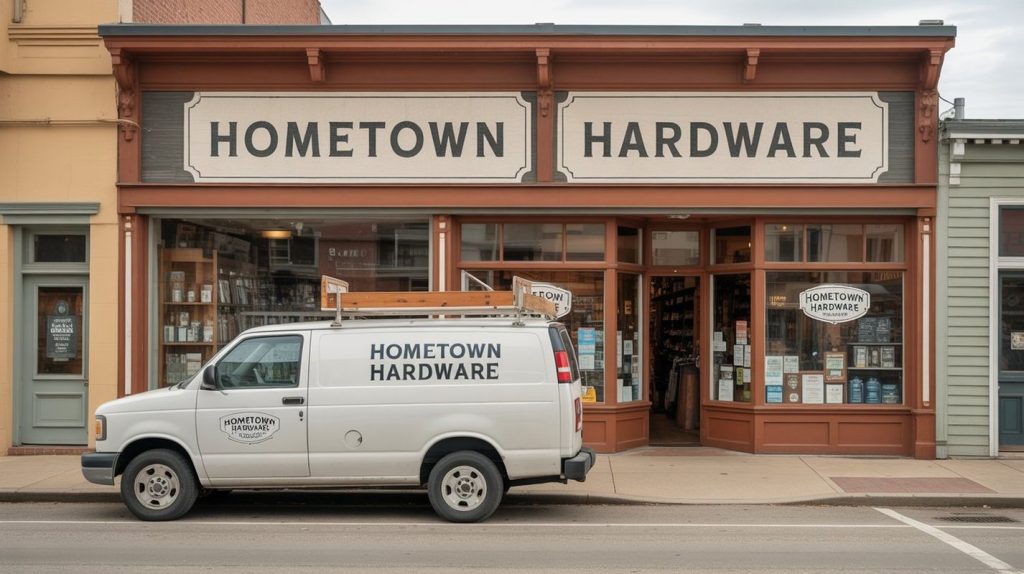
Consistency is everything here. Same colors across your storefront, website, social media, business cards, and that van your team drives around town. When people see your brand colors, they should immediately think of you.
But here’s what really matters: your visual identity should reflect who you actually are. A high-end law firm and a fun kids’ party venue should NOT have the same vibe.
Match your visuals to your personality and your audience’s expectations.
The best local brands embrace visual identities that match their neighborhood’s character.
A hardware store in a historic district can lean into vintage aesthetics.
A coffee shop in a modern downtown can go sleek and contemporary.
Authenticity wins.

Core Element 4: Deep Customer Understanding
You need to understand your local audience on a deep level. Not just demographics like age and income, but actual behaviors, preferences, and cultural touchpoints.
What local events do they attend?
What local issues do they care about?
What slang or phrases do they use?
What problems keep them up at night that your business could solve?
This knowledge changes everything about how you communicate. A business targeting young families talks differently than one serving retirees. A brand in a college town has a different vibe than one in a rural farming community.
Do the work.
Talk to your customers.
Ask questions.
Pay attention to how they describe their problems and what language they use. Then use that exact language in your marketing.
The businesses that truly understand their customers can tailor messaging and services in ways that feel personal and relevant. That’s when marketing stops feeling like marketing and starts feeling like genuine connection.
Core Element 5: Consistent Messaging and Voice
Your brand voice is how you sound when you communicate.
Friendly?
Professional?
Educational?
Snarky?
Whatever you choose, stick with it everywhere.
If your website sounds corporate and formal, but your social media is full of memes and casual jokes, people get confused. Confusion kills trust, and trust is everything for local brands.
Your messaging should clearly communicate your mission, values, and what makes you different. Every email, social post, website page, and in-person interaction should reinforce the same core messages.
Think about it like this: if your brand voice was a person at a party, would they be the same person in every conversation?
Or would they have multiple personalities depending on who they’re talking to?
Brands that maintain consistency across all channels build recognition faster and establish trust more effectively. Your voice becomes familiar, and familiarity breeds loyalty.

Core Element 6: Exceptional Customer Experience
Every single interaction someone has with your brand matters.
Every.
Single.
One.
From the moment they see your sign, visit your website, call your phone number, walk through your door, or receive their order, they’re forming opinions about whether you’re worth their time and money.
Local brands have a huge advantage here because you can create personalized, memorable experiences that big chains can’t match. Use it.
Remember people’s names. Know their preferences. Celebrate their milestones. Make them feel like they’re part of something special, not just another transaction.
The best local brands make every customer feel like a regular, even on their first visit. That’s the kind of experience that turns one-time buyers into loyal advocates who tell everyone they know.

Core Element 7: Genuine Community Engagement
Here’s where local brands can absolutely crush big competitors: you can actually be part of the community fabric in ways they never will.
Sponsor the little league team.
Show up at the farmer’s market.
Partner with other local businesses.
Support causes your community cares about.
Host events.
Be present.
But here’s the catch: it has to be genuine. People can smell fake community involvement from a mile away. Don’t sponsor an event just to get your logo on a banner. Do it because you actually care.
When you’re genuinely embedded in your community, something magical happens. Customers become advocates. They defend you when competitors move in. They go out of their way to support you. They become part of your story.
Real community engagement creates bonds that transcend typical customer relationships. You become an institution people actively want to succeed.
Why You Need This Local Branding Strategy
These seven core elements for your local branding strategy aren’t optional nice-to-haves. They’re the foundation that separates thriving local businesses from struggling ones.
Your unique selling proposition tells people exactly why they should choose you. Your brand personality and values build authentic connections.
Your visual identity creates instant recognition. Understanding your customers lets you speak their language.
Consistent messaging builds trust across every touchpoint. Exceptional customer experiences create loyalty.
And genuine community engagement turns customers into advocates.
Miss even one of these elements, and you’re leaving money on the table. But nail all seven? You become the business everyone talks about, recommends, and refuses to let fail.
Start with an honest audit.
Which of these seven elements are you crushing?
Which ones need serious work?
Then commit to fixing them one at a time.
Your local brand is either growing stronger or slowly dying. There’s no neutral. These seven elements determine which direction you’re heading.
FAQs
How long does it take to build a strong local brand? Building a solid local brand typically takes 6-12 months of consistent effort. You’ll see small wins within weeks, but becoming a recognized community fixture requires sustained commitment across all seven elements.
Do I need to hire a branding agency? Not necessarily. Many successful local brands start by nailing the fundamentals themselves. Focus on consistency and authenticity first, then invest in professional help when you’re ready to level up your visual identity.
What if my competition copies my unique selling proposition? Good USPs are hard to copy because they’re rooted in your specific capabilities and values. If someone tries to copy you, it usually comes across as inauthentic. Focus on delivering on your promise better than anyone else could.
How do I know if my brand personality is working? Ask your customers how they’d describe your business to a friend. If their descriptions match how you want to be perceived, you’re on track. If there’s a disconnect, your brand personality needs adjustment.
Can I change my brand if I’ve been in business for years? Absolutely. Brand evolution is normal and often necessary. Just make the transition intentional and communicate changes clearly to your existing customers so they understand why you’re evolving.